"Drink 8 glasses a day" - everyone's heard it, but that number is more slogan than science. How much water you actually need depends on you and the day. The good news: you don't have to count every millilitre - a sensible target and a few habits are enough to stop forgetting.
How much to really drink
A practical starting point is about 30-35 ml per kilogram of body weight - for a 70 kg person that's roughly 2-2.5 litres of fluid a day. But it's a range, not a strict rule. Your needs rise with:
- heat and sweating,
- physical activity,
- a high-protein diet,
- breastfeeding or illness with fever.
Remember too that ~20% of our water comes from food (soups, fruit, vegetables), and coffee and tea count as well - the "they dehydrate you" myth is greatly exaggerated.
How to tell you're drinking too little
You don't have to guess - your body gives signals:
- Urine colour - pale straw is fine; dark yellow means it's time to drink.
- Fatigue and headache with no clear cause.
- Mistaking hunger for thirst - sometimes "wanting a snack" is just dehydration.
Do you need to count precisely
No - but logging helps build the habit. The point isn't precision, it's awareness: when you see you've only had 700 ml by evening, it's easy to catch up. After a week or two, drinking enough becomes routine and counting becomes unnecessary.
Water and weight loss
Hydration doesn't burn fat, but it genuinely supports a diet:
- A glass of water before a meal increases fullness and makes smaller portions easier.
- Swapping caloric drinks for water is often the fastest way to cut hidden calories (juice, latte, sodas).
- Better hydration = less confusing thirst for hunger.
Hydration and GLP-1
If you're on GLP-1 medication, water matters even more: the drugs reduce appetite and thirst, so it's easy to under-drink, and the risk of constipation rises. Deliberately keeping up your water makes a real difference to how you feel.
How not to forget
The best target is the one you actually hit. A few proven habits:
- A glass right after waking - an easy start to the day.
- Water with every meal - attached to a habit you won't skip anyway.
- A bottle in sight - on your desk, in your bag; what you see, you drink.
- Reminders - a few gentle notifications through the day.
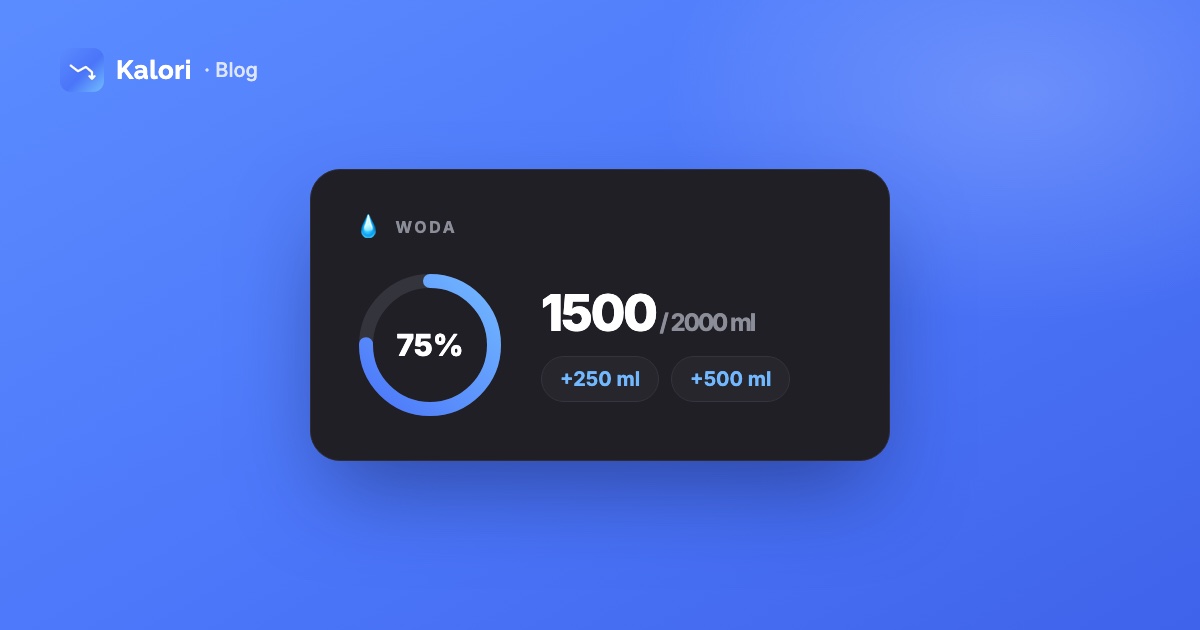
- Quick logging - add water with presets (e.g. +250 / +500 ml), no typing numbers, and keep a progress widget on your home screen.
Summary
Forget rigid "8 glasses". Set a sensible target (roughly 30-35 ml/kg, more in heat and during exercise), watch your urine colour, and attach drinking to daily habits. Logging doesn't have to be precise - it just keeps you on track.
In Kalori you add water in one tap (ready presets +250 / +500 ml), get a daily goal with a progress ring, reminders your way, and a widget on your Home and Lock Screen. Everything stays on your phone, with no account.
This article is for informational purposes only and is not medical advice.