"If the target dose is higher, why not start there right away?" - one of the most common questions at the start of therapy. The answer is simple: escalation is not bureaucracy, it is a protective mechanism. And because it takes weeks and has several stages, it is also the first place where the history of a therapy gets lost - unless you write it down.
Why increase the dose gradually at all
GLP-1 medications are hardest on the digestive system - and it needs time to get used to slower stomach emptying. Starting low and increasing slowly:
- keeps nausea and other symptoms at a bearable level,
- lets your doctor assess how you tolerate each level before you go higher,
- reduces the risk of having to stop the therapy right at the start.
There is one price: the full effect takes time - the weight really starts moving once you reach the maintenance dose.
What a typical schedule looks like
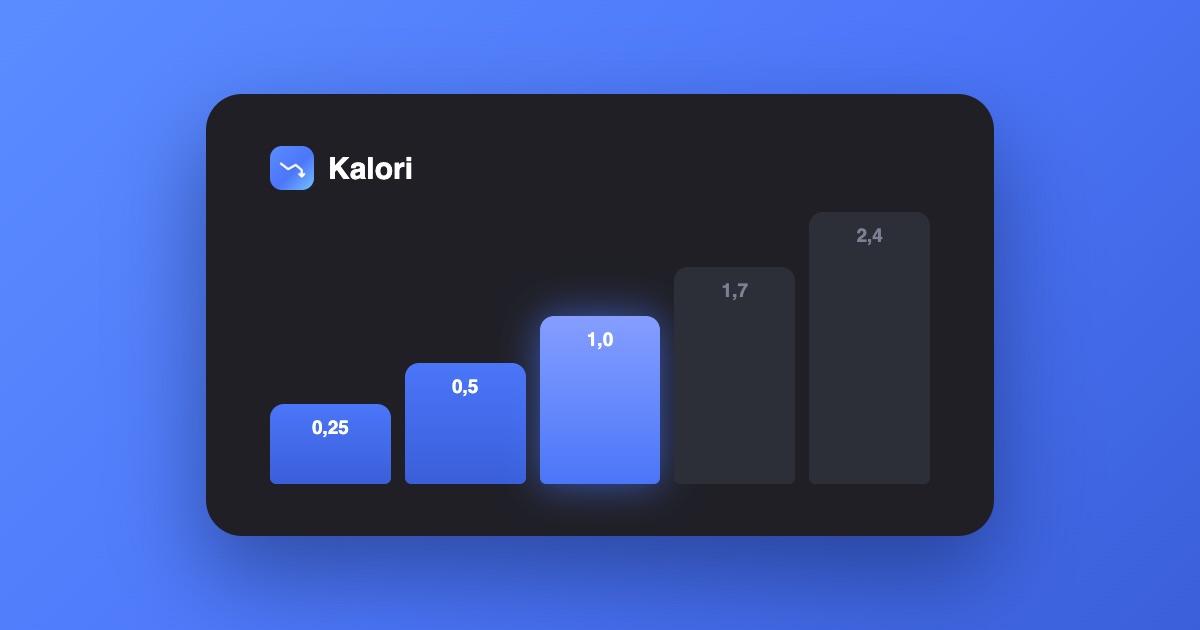
Schedules differ between medications, but the pattern is shared: start low, change roughly every 4 weeks, up to the maintenance dose. For semaglutide in obesity treatment it is, for example, the path 0.25 → 0.5 → 1.0 → 1.7 → 2.4 mg, spread over several months. Two things worth knowing:
- The starting dose is not "therapeutic" - it is for adaptation; a lack of spectacular results on it is the norm, not a failure.
- The schedule is not a rigid calendar. If you tolerate a level poorly, your doctor may extend a stage or step the dose back - and that is a normal part of therapy, not a deviation.
What not to do on your own
Two things: do not speed up (a higher dose sooner = the same side effects, only stronger - and the weight effect does not grow proportionally) and do not slow down or skip doses without your doctor knowing. Any self-made change also breaks something else: the ability to judge what is actually working.
What to expect after each dose change
The most common scenario: a temporary intensification of symptoms for a few days up to 1-2 weeks after entering a new level - mostly nausea and fatigue in the first day after the injection - and then back to normal. How to note them and when to react, we cover in detail in GLP-1 side effects. Rule of thumb: after a dose change, give yourself two weeks before judging "how this dose treats me".
Dose history: the cheapest insurance of the whole therapy
Six months in, the doctor's questions sound like: "since when have you been on 1 mg?", "how did you handle the move to 1.7?", "when was the last increase?". Almost nobody answers those from memory. Yet it is enough to write down the date of every dose change - ideally in the same place as your injections (the scheme is in the injection log) - and the whole timeline of the therapy can be reconstructed in seconds:
- when each level started and how long it lasted,
- what happened to your weight on each of them,
- which symptoms came with which change.
In Kalori you enter the dose at each injection, and the dose history arranges itself into an escalation timeline - with well-being notes grouped under every level. Before a check-up, it is all in the summary for your doctor. Everything locally on your phone, no account.
Summary
Escalation is slow because it is meant to be - it is an adaptation period in which your body and your doctor gather data. Do not change the pace on your own, give yourself two weeks after every change and write down the dose dates. A therapy run "with a history" is a different quality of conversation in the consulting room.
This article is for information only and is not medical advice. Always agree the schedule and dose changes with your doctor.