You start the therapy and naturally want to know one thing: when will the scale move and how fast. The internet does not help - next to stories of "minus 15 kg in 3 months" you will find "nothing works for me". The truth is less spectacular and more predictable: semaglutide works gradually, and its effect grows together with the dose. Here is a realistic roadmap, week by week.
The first weeks: small dose, small effect (on purpose)
Therapy starts at a dose lower than the target one - not to lose weight, but to let your body get used to the medication and keep side effects bearable. Appetite usually drops already in this period, but the changes on the scale can be modest: anywhere from zero to 2-3% of body weight in the first month is a completely normal range. If you compare yourself with results from ads or groups - remember those talk about full doses and long months.
Dose escalation: the effect catches up with the therapy
The dose is increased gradually, usually every few weeks, up to the maintenance level. In practice this means you will see the strongest effect only after a dozen or so weeks - once you reach the target dose. Many people notice the "food noise" quieting down exactly in this period: less thinking about food, faster satiety, smaller portions without a fight. It is worth writing down the dates of dose changes - without them it is hard to judge later what worked (we describe how in the injection log).
What pace is typical
In clinical trials, people on semaglutide lost on average around fifteen percent of body weight over a year or more - but that is an average at the full dose over a long time. In practice, once you reach the maintenance dose, a sensible reference point is a healthy pace of about 0.5-1% of body weight per week, with better and worse weeks. Half the battle is not driving yourself crazy with comparisons: the spread between people is large and comes from genes, diet, other medications and the starting point.
Weeks with zero (or a plus) are part of the deal
Even when the therapy works, there are weeks without a drop - weight can jump 1-2 kg from day to day because of water, salt, your cycle or training. That is why the only honest way to judge is a 2-4 week trend, not a single reading. If the scale stands still for longer, read our post on the GLP-1 plateau - a separate topic with concrete steps.
When a lack of results is a real signal
There are people for whom the medication works weaker - it is not a myth and not your fault. A practical rule from clinics: if after about 3-6 months at the maintenance dose the loss is clearly below ~5% of your starting weight, it is a topic for your doctor - about the dose, an additional medication or a change of strategy. For that conversation you need data: dose dates and a weight chart, not impressions.
How to measure without going crazy
- Weigh yourself 2-3 times a week, in the morning, under similar conditions - daily weighing messes with your head, weekly readings distort easily.
- Look at the trend line, not today's number.
- Write down doses with dates - weight only makes sense against the dose.
- Every now and then take a photo or measure your circumferences - with strength training the scale can lie against you.
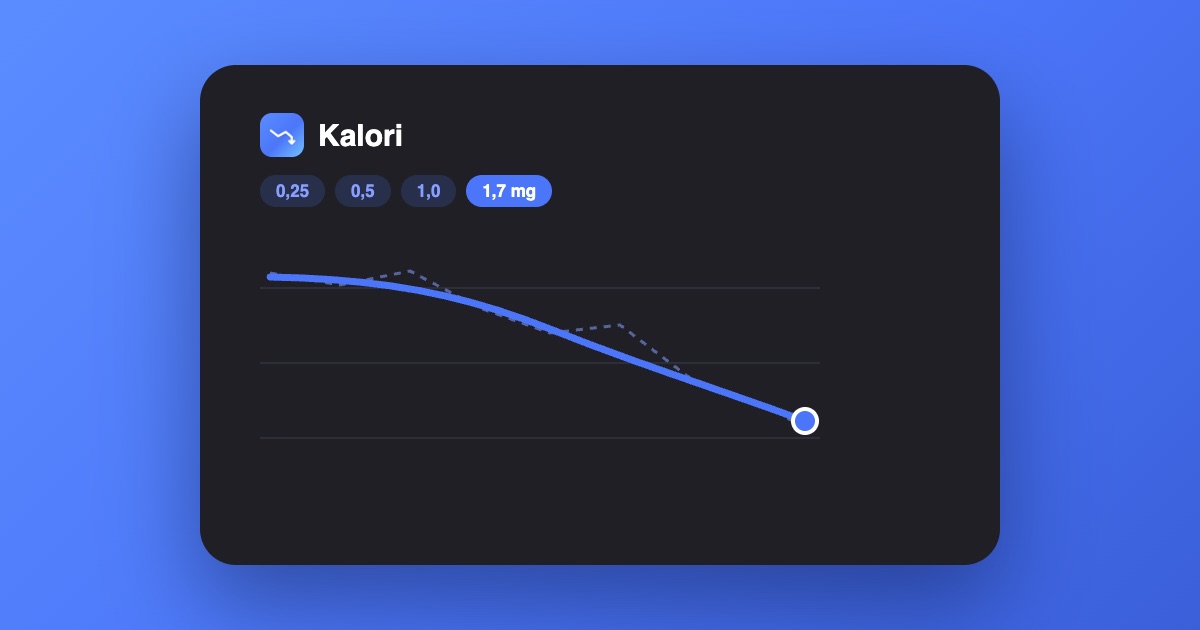
In Kalori the weight chart with a trend line, the dose history and injection notes live in one place - and before a check-up they turn into a ready summary for your doctor. Everything locally on your phone, no account.
Summary
The start can be slow because it is meant to be: the low dose is an adaptation period, not a failure. The real effect is judged by the trend over weeks at the maintenance dose - and then, with data in hand, every decision (continue, adjust, change) becomes easier.
This article is for information only and is not medical advice. Always discuss the pace of therapy, dosing and the assessment of results with your doctor.