You step on the scale and it shows +1.2 kg versus yesterday - even though you stuck to your diet. Sound familiar? Relax: daily weight swings of 1-2 kg are completely normal and almost never mean fat gain. Here's what's really happening and how to read the numbers without losing your mind.
Where the swings come from
Over a single day, your mass changes mainly through water and the contents of your digestive tract, not body fat. To gain 1 kg of fat you'd have to eat roughly 7000-7700 kcal above your needs - practically impossible in one day. So a jump on the scale is almost always water or simply food "in transit".
The most common causes of a spike
- Salt - a salty meal holds water for 1-2 days.
- Carbs - every gram of glycogen binds ~3 g of water; after a big bowl of rice or pasta, weight rises (that's not fat).
- Strength training - muscles retain water as they recover from a workout.
- Menstrual cycle - water retention can add 0.5-2 kg in a certain phase.
- No bowel movement - gut contents are real mass on the scale.
- Alcohol and travel - dehydration/rehydration, different food, long sitting.
How many kilos is that, really
For most people the normal range of daily swings is 0.5-2 kg. The more variables stacked at once (salty dinner + workout + poor sleep), the bigger the morning jump. It's noise, not a signal.
How to weigh yourself to see the truth
Standardize the conditions and the chart calms down:
- weigh yourself in the morning, fasted, after the bathroom, in similar clothing (or none),
- ideally daily or a few times a week, always the same way,
- record one reading and move on - don't weigh 3 times "to be sure".
Read the trend, not the dot
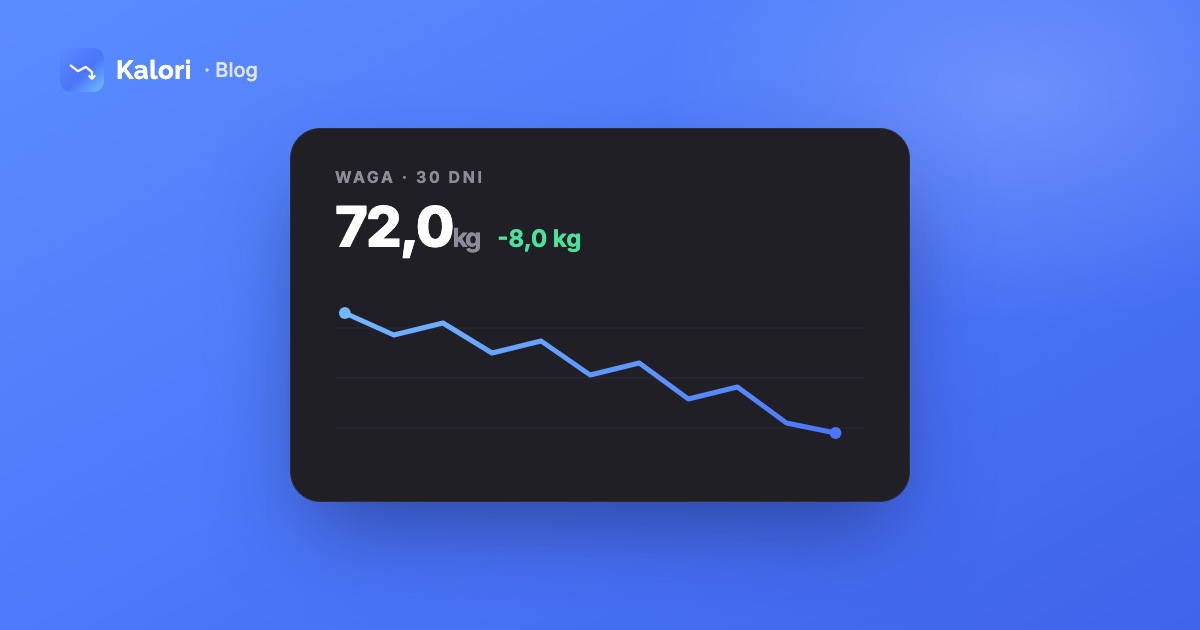
The key rule: look at the direction over weeks, not a single day. A weekly average helps - compare this week's average to last week's. If the trend line is falling (a healthy rate is about 0.5-1% of body weight per week), you're doing well, even if yesterday "jumped" 0.8 kg. A weight chart smooths the noise and shows what's actually happening.
When it isn't water after all
If the trend rises consistently for 2-3 weeks despite your efforts, that's no longer fluctuation - time to look at your calorie balance (underestimated fats and drinks are usually the culprits). It works the other way too: a steady drop in the weekly average is real fat loss, even with daily spikes.
Summary
Daily weight jumps are mostly water - normal and unavoidable. Standardize how you weigh, log regularly, and judge progress by the trend, not by a single morning. That's how you avoid frustration and make decisions based on signal, not noise.
In Kalori you log your weight in one tap, and the app draws the trend chart right away - you see the direction, not the chaos of individual days. Everything stays on your phone, with no account.
This article is for informational purposes only and is not medical or dietary advice.