"I take the medication, so the weight should be dropping" - and yet it has been stuck for three weeks. The surprise and frustration are understandable, but the fact itself is not strange at all: plateaus happen on GLP-1 too, and they have concrete, countable causes. The good news: there is almost always something you can do about it.
First, make sure it is a plateau at all
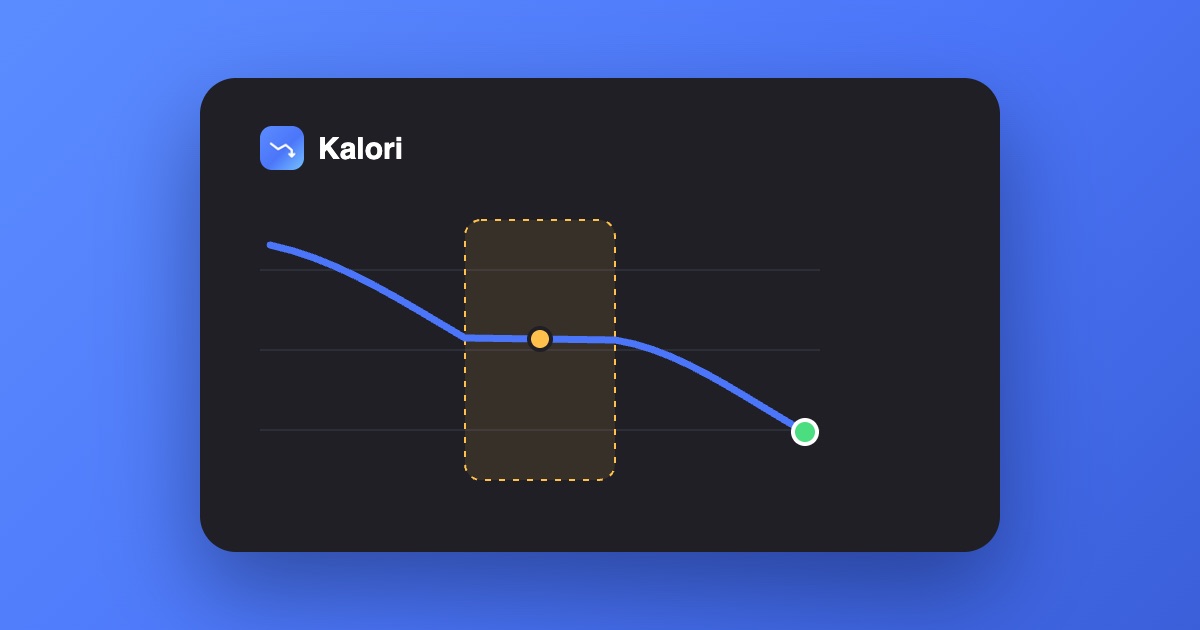
Weight can jump 1-2 kg from day to day because of water, salt, your cycle, training or stress - and a week "in place" is often just noise. We only talk about a plateau when the trend stands still for 3-4 weeks despite keeping your habits. If you do not track a weight chart, start there - without a trend, every judgement is guessing.
Why the medication does not exempt you from the energy balance
GLP-1 does not burn fat - it works through appetite: less hunger, faster satiety, quieter "food noise". You lose weight because you eat less. Which means a plateau on the medication has the same mechanisms as any other:
- Calories quietly crept back. The body adapts to the medication, appetite bounces back a little, portions grow unnoticed - especially drinks, snacks and "healthy" extras.
- Your energy needs dropped. After losing, say, 10 kg, your body needs less energy - the deficit from three months ago may have just zeroed out. Recalculate your needs for your current weight.
- Water masks the loss. Stress, worse sleep, more salt, a new training plan - retention can hide real fat loss for 2-3 weeks.
What to check and do, step by step
- Go back to more careful calorie logging for 1-2 weeks. Not forever - just to see where the deficit escaped. This is the most common culprit.
- Update your calorie goal to your current weight (calculator above) - and watch your protein, which protects muscle and keeps you full.
- Add movement, not starvation: an extra 1,500-2,000 steps a day makes a difference without the stress of drastic cuts.
- Give it time if you are still escalating - your current dose may not be the target dose yet, and the effect is still catching up (we wrote about it in the realistic week-by-week map on semaglutide).
- Do not abandon your records. A plateau is the moment most people stop logging - and lose the only tool that will show them things have started moving again.
How a GLP-1 plateau differs from a regular one
In two ways. First, on the medication it is easier to get a false sense of security - "I take the injection, so I do not have to pay attention" - which makes the calorie comeback faster and more invisible. Second, there is an extra variable: the dose. A regular plateau is broken with habits; on GLP-1 the answer is sometimes also an adjustment of the therapy - but that is your doctor's decision, not a forum's.
When to take it to your doctor
- The plateau lasts more than 6-8 weeks despite genuinely kept habits and recalculated calories.
- You have been on the maintenance dose for months and the total loss is far from expectations.
- Your appetite is back to pre-therapy levels - worth reporting regardless of the scale.
Come to that conversation with data: a weight chart, dose history, notes. General plateau advice (not only on medication) is collected in a separate guide.
In Kalori you see the weight trend line instead of single jumps, and the dose history and injection notes are at hand - the ready summary for your doctor turns it into specifics for the visit. Everything local, no account.
Summary
A plateau on GLP-1 is not a sign that "the medication stopped working" - it is a sign that the balance has evened out. Confirm the trend, recalculate your needs, close the calorie gap and give it 2-3 weeks. And if it still stands - go to your doctor with data, not into panic.
This article is for information only and is not medical advice. Always agree changes to therapy and dosing with your doctor.